
Crowley County Bench Warrants Explained
Colorado’s Judicial Branch defines a bench warrant as a judge’s order for someone’s arrest. “Bench” points to the judge and court, not to a separate Sheriff database. Under C.R.S. §16-2-110, a court may issue one when a person who received a summons or summons and complaint fails to appear. The word “may” matters. A missed date does not support assumptions about what a judge ordered in a specific Crowley County case.
Failure to appear can arise in a Crowley County Court traffic or misdemeanor matter, a Crowley District Court case, or a town municipal case. Failure to follow another court direction may also prompt a bench warrant. An unpaid balance and a missed appearance are different facts. Paying a balance does not prove that a judge recalled the order.
Crowley Bench Warrant Court Route
Crowley Combined Court handles both county-court and district-court work at 110 East 6th Street, Room 303, in Ordway. County court commonly handles traffic matters and misdemeanors. District court handles felony cases and other matters within district jurisdiction. The shared building does not erase that difference. The case type still identifies which court owns the order.
The official Crowley Combined Court page lists the clerk route, current notices, dockets, record requests, payments, and self-help resources. Call 719-267-4468 before a visit. Published general counter hours are Monday through Friday, 8 a.m. to noon and 1 p.m. to 4 p.m. Those hours are not a walk-in warrant calendar, and no local surrender schedule was found.
Start here: Have the case or ticket number, court location, and missed date ready when asking the clerk for procedural instructions.
How Crowley County Bench Warrants Are Issued
The judge who has authority over the pending case decides whether to issue a bench warrant. A served summons can establish a duty to appear, and a missed appearance can lead the judge to direct an arrest. The Sheriff does not create that judicial order. The Sheriff and other authorized peace officers may execute it after issuance.
Colorado has no single public statewide warrant search. A docket entry labeled “Appearance on Arrest Warrant” may show a scheduled hearing, but it does not disclose the order’s full history or guarantee that the warrant remains active. Likewise, the Crowley Sheriff gallery may omit a new, restricted, municipal, recalled, or otherwise unpublished item. Only the issuing court can confirm recall or cancellation.
Crowley Bench Warrant Gallery Limits
The Crowley Sheriff active-warrant page is an official local channel, but it is an image-based list rather than a fielded search tool. The inspected page showed no public name box, case filter, warrant-type field, issuing-court field, status field, or update date. It should be read as a posted agency list, not as a live countywide registry.
A missing name does not prove there is no warrant. A displayed item does not prove that an order was not just recalled. Do not copy or circulate the gallery’s names or images. Use the result to identify a need for direct confirmation with the Crowley Combined Court or the proper municipal court.
The Sheriff’s Records section offers a different service. It maintains case reports and other criminal-justice data and handles releases to authorized people under the Colorado Criminal Justice Records Act. Its posted hours are Monday through Thursday, 8 a.m. to 4 p.m. Those hours are for records work, not a surrender window. The linked authorization document also seeks sensitive data and is not a public bench-warrant status request. Ask which record is available before submitting personal information.
Bench Warrants and Arrest Warrants Compared
Both orders authorize arrest, yet they start from different events. A bench warrant usually follows a missed duty in an existing case. An arrest warrant rests on a sworn or affirmed factual showing of probable cause that a specified person committed an offense. The companion Crowley County arrest warrant search explains that probable-cause path in detail.
| Feature | Bench Warrant | Arrest Warrant |
|---|---|---|
| Trigger | Missed appearance or unmet court duty | Probable cause of an offense |
| Issuing act | Judge acts in a pending matter | Judicial officer reviews sworn facts |
| Underlying matter | An existing summons, ticket, or case | An alleged offense tied to a person |
| Resolution | Issuing court sets recall steps | Court directs appearance, bond, and case process |
Crowley Bench Warrant Bond Forms
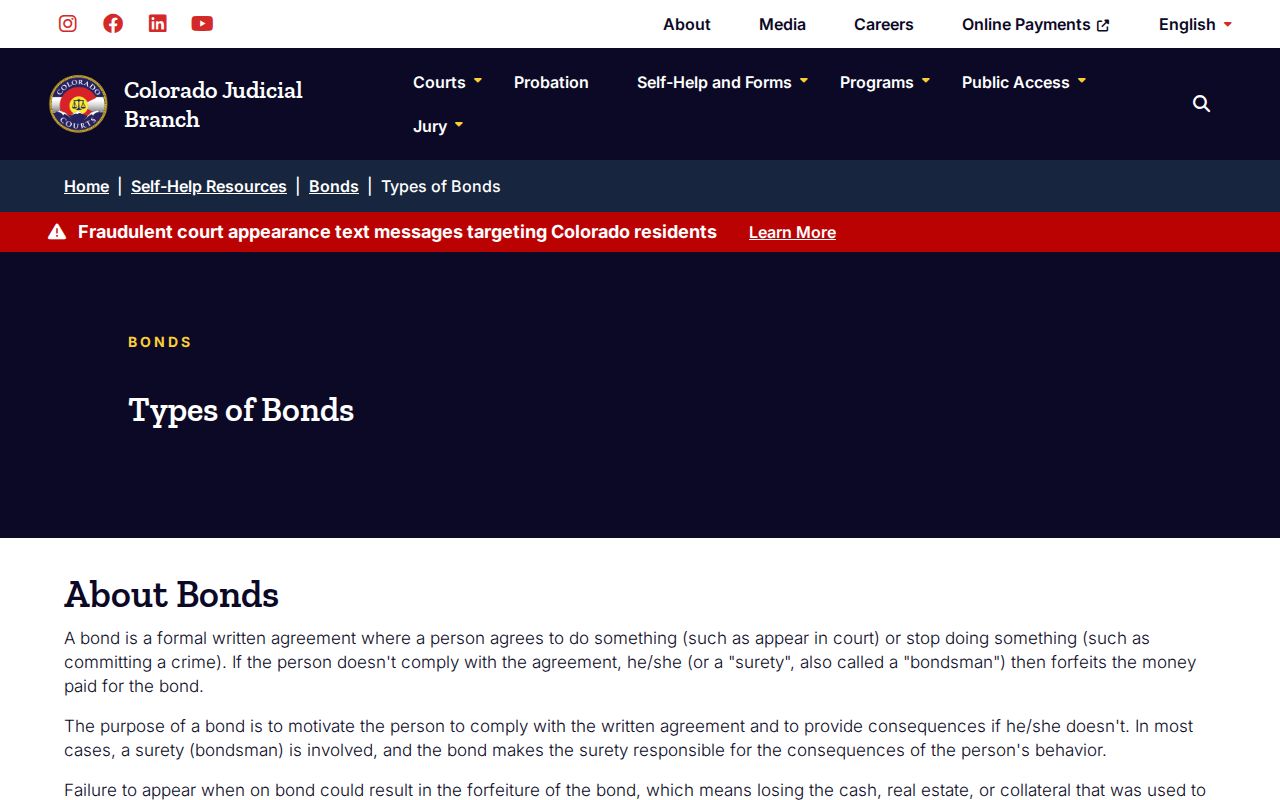
Colorado’s bond materials identify JDF 370, Appearance Bond, as a form used to cancel a warrant or obtain release. That statewide description is not a promise that the form fits every Crowley County bench warrant. The clerk must confirm whether it is needed, where it must be filed, and whether a personal appearance or attorney filing is required.
The official source for the form and basic bond types is the Colorado Judicial Branch bond page. The Sheriff’s bond page addresses payment and release after bond is set. A bond receipt does not itself prove that the issuing judge recalled the warrant or closed the underlying case.
Resolving a Crowley County Bench Warrant
Resolution begins with verification, not an unplanned visit. No official Crowley source publishes a general walk-in surrender policy, a dedicated warrant counter, or a same-day recall promise. Follow the instruction for the specific case and keep proof of each completed step.
- Confirm the notice through an official docket or clerk phone number.
- Identify the state, municipal, or federal court that issued the order.
- Ask whether an appearance, attorney filing, bond, payment, or form is required.
- Follow the court’s case-specific direction, then obtain the next court date.
- Keep the receipt and written recall or cancellation confirmation.
- Recheck with the issuing court and Sheriff when timing matters.
Caution: Do not ignore a Crowley bench warrant or assume that payment alone ends it. Confirm the judge’s recall or cancellation.
Crowley Weekend Bond Hearings
The Colorado Judicial Branch publishes a weekend bond schedule that lists Crowley County Saturday hearings at 5 p.m., followed by a second hearing the next day at the same time. This is a bond-hearing route for people in custody. It is not a public walk-in docket and does not guarantee eligibility, a bond amount, warrant recall, or release on the same day.
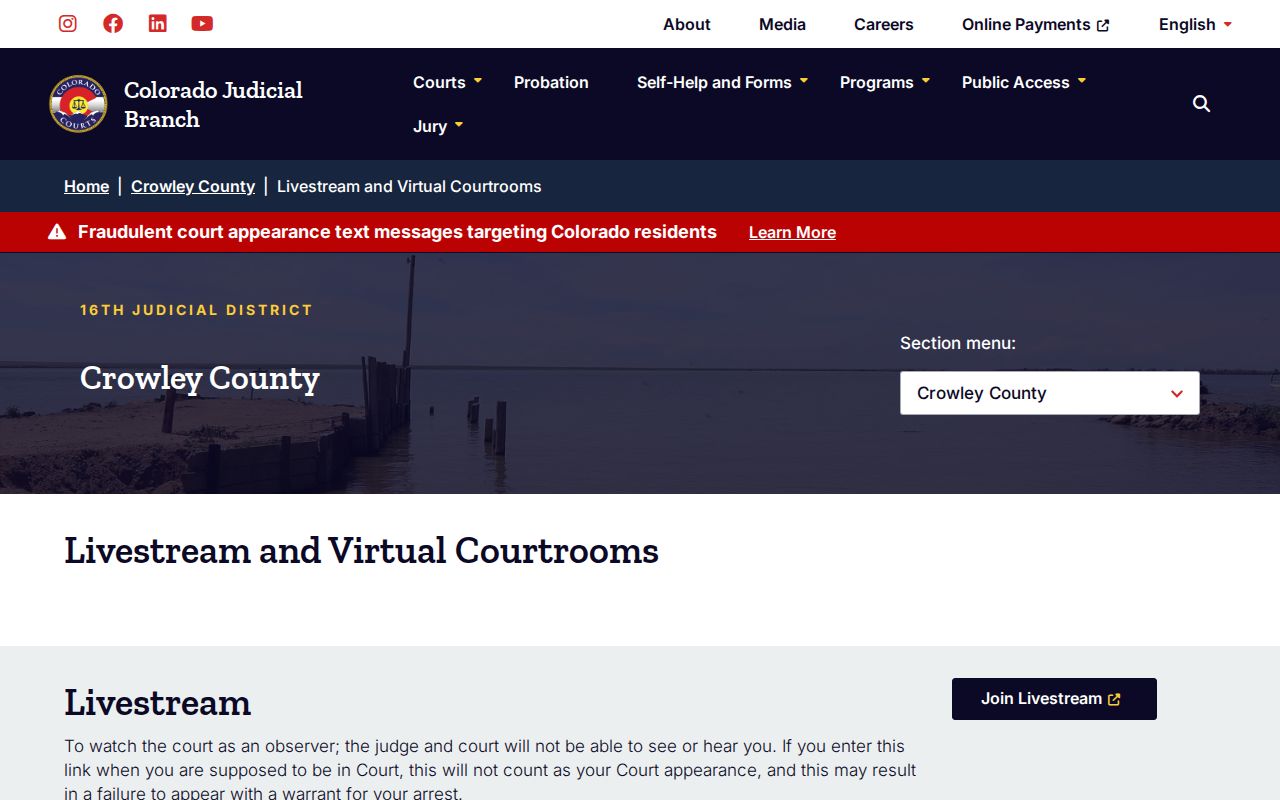
The current schedule is best checked at the official weekend bond hearing page because schedules can change. The official virtual courtroom listing also shows Crowley’s jail-advisement route.
Finding the Court That Issued the Warrant
A Crowley County Court ticket or misdemeanor, a Crowley District Court felony matter, and a town ordinance case do not share one clerk with power to recall every warrant. Ordway, Olney Springs, Sugar City, and Crowley each require municipal confirmation when a town ordinance is involved. No town-specific public warrant portal was found.
Start with the court name on the summons, ticket, docket, or notice. If that is unclear, use the Colorado docket search for hearing clues and then call the Crowley clerk. The docket supports filters for court location, case data, party, attorney, and date, but it has no active-warrant filter. A municipal matter should go to the town clerk, while a federal order belongs to the U.S. District Court for Colorado.
Crowley Bench Warrant Proof
Keep the case number, receipt, bond papers, next appearance date, and a copy or clear confirmation of the recall or cancellation. “Recalled” or “cancelled” means the issuing court withdrew the warrant’s active effect. “Released” means custody ended under stated terms. Those events may be related, but they are not interchangeable.
No official source states how fast a Crowley Sheriff gallery image changes after court action. Ask the issuing clerk when the order was entered and whether another agency needs notice. If the Sheriff held or executed the order, call the current general routing number, 719-267-5555, for the proper records, detention, or bond contact. Verify that number before travel because an older official document contains a different line.
A register of action can document filings and hearing history, but it is not guaranteed to serve as a live warrant certificate. The Judicial Branch record request form asks for a county, case type, year, case number or party, and the documents sought. Access can be limited for juvenile, sealed, suppressed, or confidential material. Request only what is needed, and rely on the clerk’s direct status confirmation when deciding the next step.